 Skip to navigation
Skip to main content
Skip to navigation
Skip to main content 

BELKA calculator
Wall area calculator: your m² and your BELKA quantity
Measure a single wall or a whole room, subtract the windows and doors, and get a realistic planning figure for BELKA cotton wall coating in one step.
- A single wall
- A whole room
- Windows and doors
- Ceiling optional

Free calculator
Calculate wall area and BELKA quantity
The calculator plans with a coverage of about 3 m² per kilogram at a layer of about 2 mm. What you actually use depends on the substrate, the texture and how the material is worked.
BELKA colours
Now you have your area: choose the colour
Current prices, variants, delivery information and availability are on each product page.
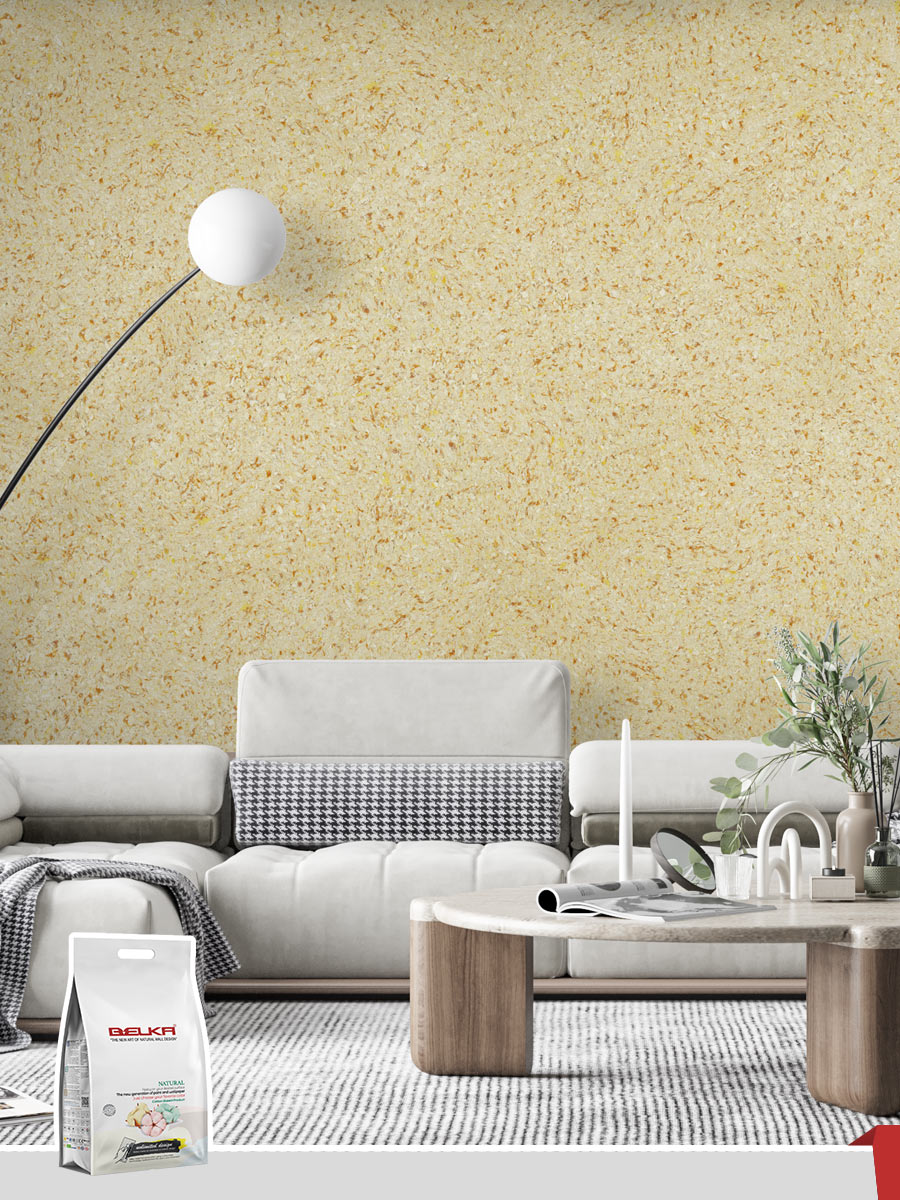 B1
B1 Belka B1 Cream
A calm cream tone for bright rooms and quiet, even wall surfaces.
See this colour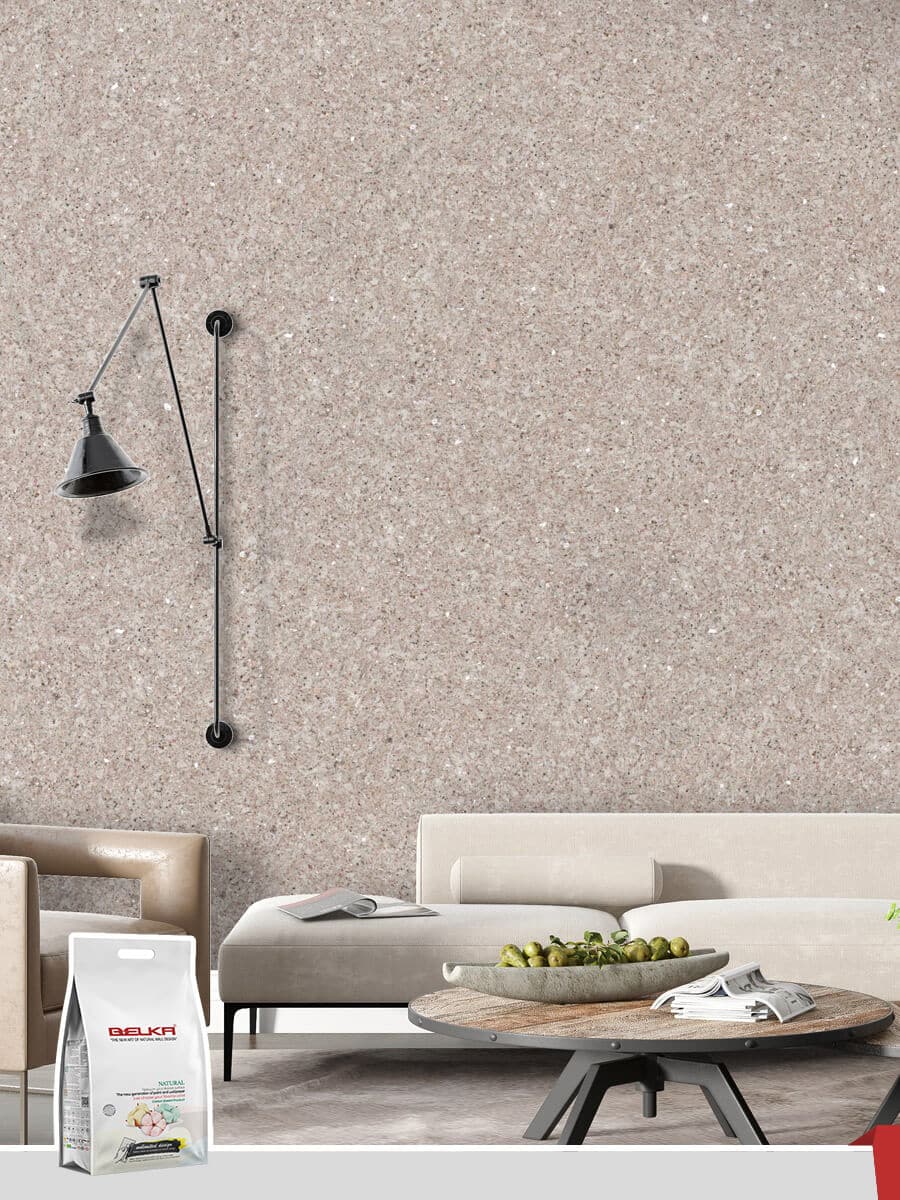 B11
B11 Belka B11 Sand Beige
A warm sand beige that sits well with most furniture and flooring.
See this colour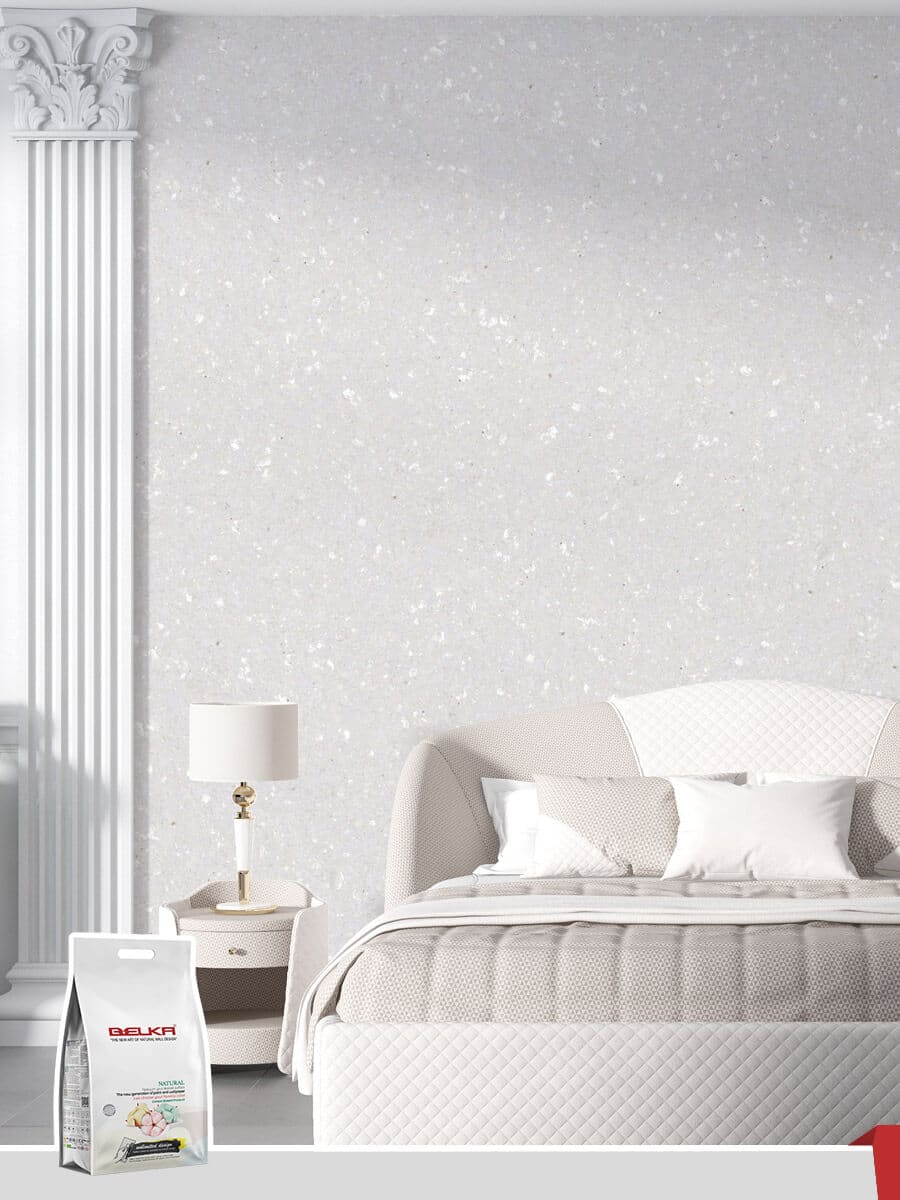 B5
B5 Belka B5 Shiny White
A clean white with a light shimmer, for bright rooms and open plans.
See this colour S302
S302 Belka S302 Pearl
A soft mother-of-pearl finish with a fine, restrained texture.
See this colour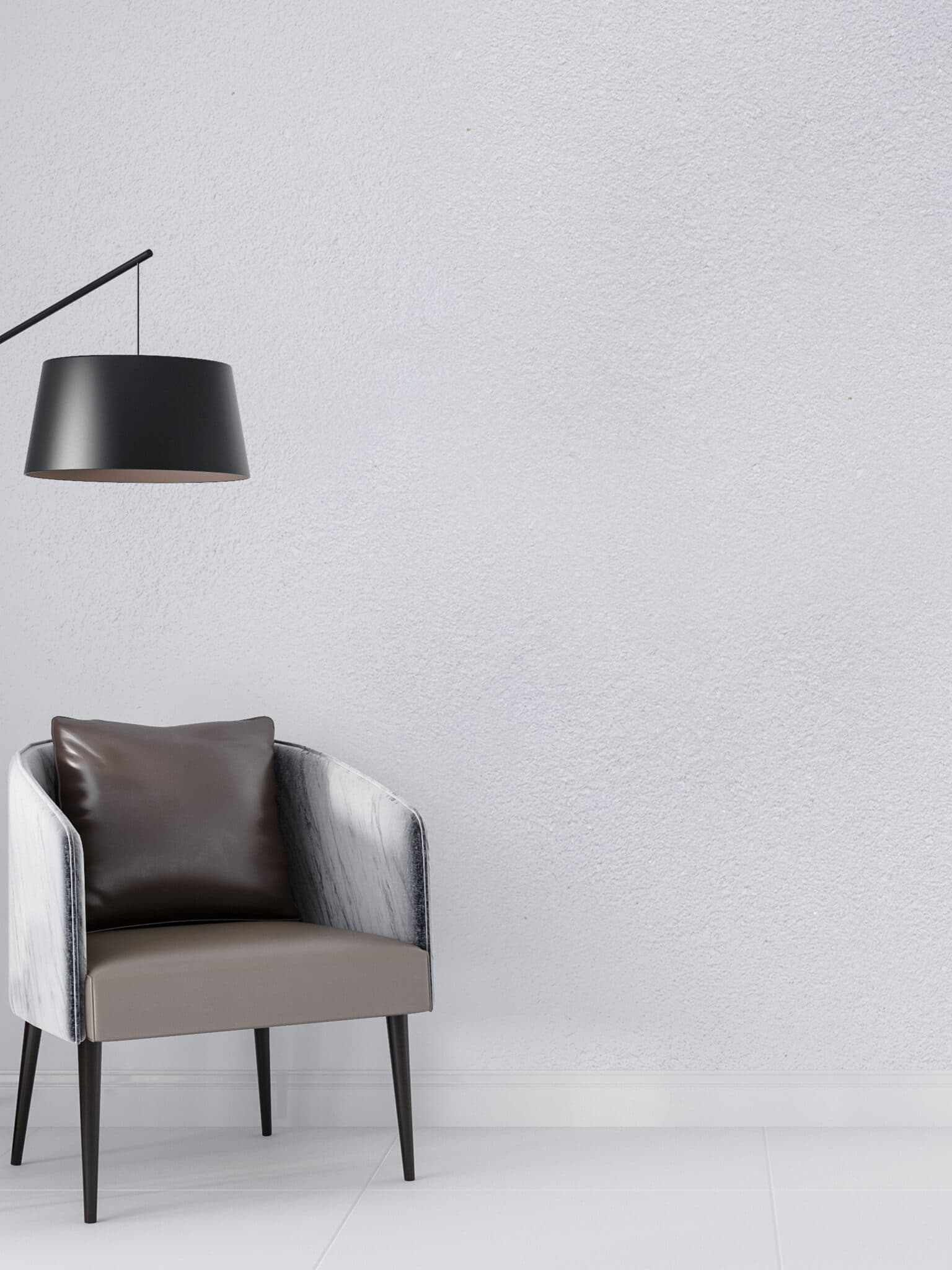 S307
S307 Belka S307 Pebble Grey
A neutral grey for modern interiors and darker feature walls.
See this colourShort answer
How do you calculate wall area?
Wall area is width × height. For a whole rectangular room, use 2 × (length + width) × height. Windows and doors come off as subtracted area. For BELKA, divide the net area including your reserve by the coverage per kilogram.
The basics
What is a square metre, and why does it matter?
A square metre (m²) is the area of a square one metre along each side. For a decorating project that means multiplying the height of a wall by its width.
That one figure decides how much material you buy, whether you have to reorder halfway through the job, and whether the finished surface comes out even.

Planning
Why an accurate wall area matters
Cost control
You buy close to what the wall actually needs instead of over-ordering.
Time saved
Good planning means fewer interruptions and no emergency top-up order.
Less waste
The reserve is chosen deliberately rather than guessed at the checkout.
An even finish
On a whole room, having enough material for one continuous surface is what keeps it uniform.
How to
Step by step: calculating wall area
These four cases cover plain walls, openings, recesses and awkward shapes.
1. A straight wall with no window or door
Measure the height and the width. The formula is wall area = height × width. Example: 2.5 m × 4 m = 10 m².
2. A wall with a window or a door
Work out the full area first. Then measure the window and the door separately and subtract them. Example: 10 m² wall − 1.8 m² door − 1.44 m² window = 6.76 m² net area.
3. Recesses, projections and columns
Split the wall into rectangles. Work out each part on its own, then add or subtract it depending on the shape.
4. Round or triangular surfaces
Round surfaces: π × radius². Triangular surfaces: base × height ÷ 2. Add them to the total or take them off, depending on the project.
Whole room
How do you calculate the wall area of a whole room?
For a rectangular room the formula is 2 × (length + width) × height.
To include the ceiling, add length × width on top. At 5 m × 4 m that is another 20 m², so 65 m² in total.
Gross area and net area
- Gross area
- Everything you measured, openings included.
- Net area
- The surface you will actually cover, once windows and doors are taken off.
BELKA planning
How much BELKA do you need per m²?
As a planning rule: 1 kg of BELKA covers about 3 m² at a layer of about 2 mm. The real figure moves with the substrate, the layer you apply and your working method.
Smooth walls are usually fine on a 5–10% reserve. On uneven surfaces, heavier textures or a first application, 10–15% is the safer choice.
Choosing a reserve
- 5–10% on smooth, well-prepared walls
- 10–15% on uneven walls or a first application
- On a whole room, plan generously rather than reordering mid-surface.
Cost planning
Why the exact area decides the budget
A comparison only means something once the area is right. What follows are the factors that drive each cost, not quotes.
BELKA cotton wall coating
Planned from net area, coverage per kilogram and reserve. What moves it: the substrate, the layer and the application.
Conventional wallpaper
Planned in rolls, with pattern repeat, offcuts, seams and spare rolls for later repairs.
Wall paint
Planned from area, opacity, substrate, the number of coats and how often it is refreshed.
Where it is used
Where a wall area calculation is needed
Wall paint
To plan the right volume and any second coat.
Conventional wallpaper
For roll count, cutting and offcuts.
BELKA
For net area, kilograms and reserve.
Ceilings
When the ceiling is being finished as well.
Renovation work
With recesses, doors, windows and irregular surfaces.
BELKA
BELKA is a cotton wall coating, not a wallpaper and not a paint
BELKA is mixed with water and applied to dry interior walls with a trowel. It is not a roll of wallpaper and it is not a paint: it is a cotton-based wall coating that goes on as one seamless surface.
That is why the planning works from net area. The more carefully you measure, the closer your order lands to what the wall actually takes.
The technical evidence sits on its own page: emissions, material purity, asbestos, acoustics, thermal conductivity, fire behaviour, smoke and heat release, with the report numbers. See the cotton wall coating test reports.
Worth settling before you order
- Check the substrate
- Subtract windows and doors
- Plan a reserve
- Choose the colour and the fibre texture
- Finish a wall in one continuous go
Avoid these
Common mistakes when calculating wall area
Forgetting windows and doors
The quantity comes out higher than the wall needs.
No reserve at all
On uneven walls this is what forces a reorder mid-job.
Ignoring the ceiling
If the ceiling is being finished too, it has to be calculated separately.
Underestimating the layer
A thicker layer uses more material and takes longer to dry.
FAQ
Questions about wall area and BELKA quantity
How do you calculate wall area in m²?
Width times height. Example: 4 m wide by 2.5 m high is 10 m².
Do I have to subtract windows and doors?
Yes, if you want the net area you will actually cover. Large openings should always be taken off.
How do I calculate the wall area of a whole room?
For a rectangular room: 2 times (length plus width) times height. Then subtract the windows and doors.
How much BELKA do I need per m²?
As a planning rule, about 1 kg for every 3 m² at a layer of about 2 mm. The real figure depends on the substrate and the application.
Why should I plan a reserve?
A reserve absorbs uneven surfaces, thicker layers and small measuring errors, so you are not held up by a reorder.
Is BELKA a normal wallpaper?
No. BELKA is not a roll of wallpaper. It is mixed with water and trowelled onto the wall as a seamless cotton coating.
Next step
Work out the area, plan the quantity, choose the colour
Run the numbers, check your reserve, then pick the BELKA colour for the room.